
Elden Ring Nightreign Suits Handheld PCs
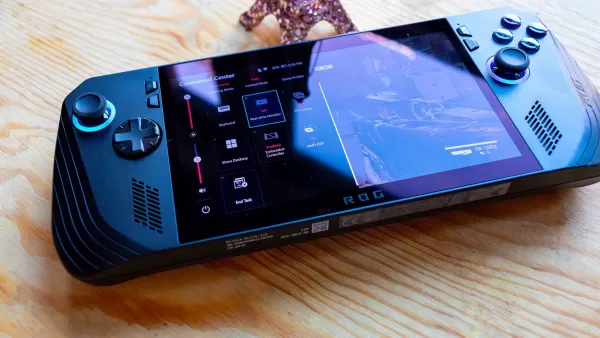
Elden Ring performed exceptionally well on the Asus ROG Ally X, but with Nightreign now available, handheld gaming PC enthusiasts (myself included) are eager to see if the positive trend continues. While the Shadow of the Erdtree expansion was more demanding than the base game, Nightreign is a standalone release, potentially pushing hardware even further. I'm happy to report that it actually runs better than the original Elden Ring.
This might seem counterintuitive, but the reason is straightforward: Elden Ring Nightreign is confined to a smaller map called Limveld, which significantly reduces the amount of on-screen activity at any given moment. It also helps that the environment is modeled after Limgrave rather than the more visually complex areas from Shadow of the Erdtree. That expansion, released two years later, featured intensive effects that truly challenged my Ally.
A Note on the Hardware
The market is filled with various handheld gaming PCs, and the Asus ROG Ally X stands out as a top contender. It uses an AMD Ryzen Z1 Extreme processor, similar to rivals like the Lenovo Legion Go, but its upgraded 24GB of RAM running at 7,500MHz allows for a full 16GB allocation to the GPU—double the 8GB of the original Ally. This makes the ROG Ally X an ideal device for testing new releases like Elden Ring Nightreign, at least until the rumored AMD Ryzen Z2 Extreme arrives later this year in the heavily leaked Xbox-branded Ally.
Although the ROG Ally X has superior specifications on paper, the Steam Deck should not be underestimated. Valve's deep, per-game optimization can sometimes extract greater performance from hardware. The company previously released an official optimization for Elden Ring on Steam Deck, and a similar update for Nightreign is a strong possibility.
Can the Asus ROG Ally X Handle Elden Ring Nightreign?
My testing focused on the castle at the heart of Limveld. This location is the largest structure on the unmodified base map, featuring giants that hurl massive pots of magic at the player. It's here that my framerate consistently reaches its lowest point, making it the perfect benchmark for performance. I also began a new game for each graphics preset change, as the game recommends.
I configured my ROG Ally X to Turbo mode (30W) and connected it to a power outlet to ensure maximum performance output. I also allocated 16GB of RAM to the GPU to leverage the hardware fully—a distinctive advantage of the Ally X with its total 24GB of RAM. Most other handhelds have only 16GB of total RAM, limiting GPU allocation to 8GB. These settings allow the Asus ROG Ally X to operate at its peak capability.
The game runs smoothly on the handheld, though Elden Ring Nightreign can experience performance dips during intense combat with numerous enemies and flashy visual effects, particularly in open zones. For instance, if you're swarmed by multiple blood-infused foes about to explode near you, all while viewing the expanse of Limveld from high ruins, the frame rate will suffer significantly. However, performance is much more stable in confined areas, such as thick forests, especially if you angle the camera toward the ground.
My ROG Ally X delivered an average of 30 fps at 1080p on the Maximum preset, with occasional drops to 27 fps (typically after being hit by magical pot barrages). The only other configuration that fell below 30 fps was 1080p on High, averaging 35 fps but dipping to 28 fps during castle-top battles. All other graphics presets maintained an average above 30 fps. The 1080p Medium setting averaged 39 fps, while Low averaged 43 fps with a minimum of 39 fps.
Performance is noticeably better at 720p, sometimes even reaching 60 fps. The Maximum preset at 720p averaged 41 fps, with 1% lows of 38 fps. High settings yielded a 44 fps average, with worst-case scenarios at 40 fps. While Medium and Low presets look less detailed, they provide excellent frame rates.
Elden Ring Nightreign Is Perfect on the Asus ROG Ally X
Nightreign looks stunning at 1080p with Maximum settings and plays acceptably well. I completed entire playthroughs using this configuration; while occasional stutters were irritating, the experience was generally smooth and frequently stayed above 30 fps. However, 30 fps isn't for everyone. Gamers who prioritize frame rate over resolution will find a better balance at 720p with Maximum graphics, which hovers around 41 fps—a good compromise between visual quality and smoothness.
Players determined to achieve 60 fps on their Asus ROG Ally X will have the most success at 720p, but they'll need to dial graphics down to Medium or Low. Even then, the device can't sustain a 60 fps average, only hitting that mark in less demanding situations, like inside buildings. The visual compromise is significant, as Limveld loses its depth on Low settings. The island's complex shadows vanish, and structures appear low-poly.














-
1

Announcing the Bazaar Release: Date and Time Unveiled
Feb 02,2025
-
2
Vampire Survivors – Arcana Card System Guide and Tips
Feb 26,2025
-
3

Novel Rogue Decks Android Debut
Feb 25,2025
-
4

Marvel Rivals Update: News and Features
Feb 19,2025
-
5

GTA 6 Release: Fall 2025 Confirmed
Feb 23,2025
-
6

Get Exclusive Roblox DOORS Codes for January 2025
Feb 10,2025
-
7

Marvel Rivals Unveils Season 1 Release Date
Feb 02,2025
-
8

Anime Fate Echoes: Get the Latest Roblox Codes for January 2025
Jan 20,2025
-
9

Roblox: Exclusive Prison Codes Revealed (Updated January 2025)
Feb 19,2025
-
10

DC Heroes Unite: New Series from Silent Hill: Ascension Creators
Dec 18,2024
-
Download

Street Rooster Fight Kung Fu
Action / 65.4 MB
Update: Feb 14,2025
-
Download

Ben 10 A day with Gwen
Casual / 47.41M
Update: Dec 24,2024
-
Download

A Simple Life with My Unobtrusive Sister
Casual / 392.30M
Update: Dec 10,2024
-
4
Day by Day
-
5
Translate - Voice Translator
-
6
Idle Rush : Zombie Tsunami
-
7
Dot n Beat - Magic Music Game
-
8
Mega Jackpot
-
9
Midi Commander
-
10
The Lewd Knight